
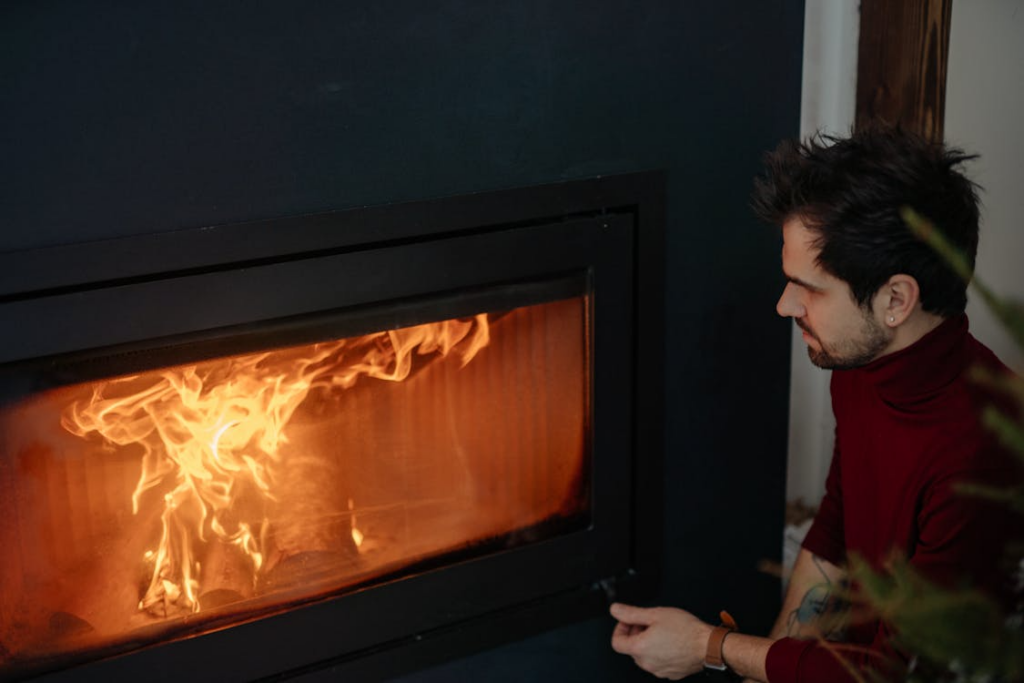
You lit a fire, poured a drink, and settled in for a cozy evening. Then the smell hit you.
That sharp, stale smoke odor creeping into the room wasn’t part of the plan. And if it’s happening without a fire burning at all, that’s a different kind of unsettling. A smoky smell isn’t just unpleasant — it’s usually a signal that something in the system isn’t working the way it should.
The good news? Most causes are identifiable. And most are fixable.
The Most Common Reasons Your Fireplace Smells Like Smoke
Smoke follows the path of least resistance. When that path leads into your living room instead of up and out through the chimney, something is disrupting the flow.
The usual suspects are a closed or partially open damper, a cold flue that hasn’t warmed up enough to draw properly, or debris sitting inside the chimney shaft. Animal nests, fallen leaves, and accumulated soot all restrict airflow. Even a chimney cap that’s bent or missing can change how air moves through the system.
Sometimes the issue is as simple as opening a window slightly before lighting a fire to help establish a proper draft. Other times, the fix runs deeper.
How a Blocked or Dirty Chimney Forces Smoke Back Into Your Home
Picture the chimney as a straw. If something’s clogging it halfway up, whatever you push through from the bottom has nowhere to go — so it comes back at you.
Blockages form gradually. A bird decides your chimney looks like a fine place to raise a family. Leaves collect near the top in autumn. Soot layers build up through a season of regular use. Each of these narrows the passage through which the smoke needs to exit cleanly.
A dirty flue doesn’t just smell bad. It actively works against the draw that pulls smoke upward. When that draw weakens, smoke spills back into the room — even during a fire that looks perfectly normal from the outside.
The Role of Air Pressure and Draft Problems in Smoke Backdrafts
This one catches people off guard because the chimney itself might be completely clean.
Negative air pressure inside a home is a surprisingly common cause of smoke backdrafts. Modern houses are well-sealed for energy efficiency, which is great for heating bills and genuinely problematic for chimney performance. When the house is tighter than the chimney’s draft, air gets pulled down the flue rather than pushed up it.
Chimney cleaning services can assess draft performance as part of a full inspection — identifying whether airflow issues stem from blockages, pressure imbalances, or flue sizing problems that require a different solution. Exhaust fans in kitchens and bathrooms can also depressurize a home enough to reverse the chimney’s draft, especially in tightly built properties.
Cracking a window near the hearth before use often resolves the issue immediately.
Creosote Buildup and Why It Makes Your Fireplace Smell Even When Not in Use
Creosote is what happens when wood smoke cools inside the flue before fully exiting. It condenses on the chimney walls as a dark, tarry residue — and it carries a persistent, acrid smell that doesn’t need a fire to activate.
Humidity makes it worse. On warm, damp days, creosote releases its odor more aggressively. Homeowners sometimes notice the smell most in summer, long after the burning season has ended. That’s not a coincidence — that’s creosote responding to moisture in the air.
Beyond the smell, creosote is the primary cause of chimney fires. Even a thin layer matters. Regular cleaning removes it before it becomes either a hazard or a permanent background scent in your home.
Weather Conditions That Push Smoke Smell Into Your Living Space
Weather plays a bigger role than most people realize.
High winds create pressure differentials across rooftops that can force air — and smell — down through the chimney. Temperature inversions, where warm air sits above cool air, can prevent the normal upward movement of smoke and push it back inside. Rain hitting a warm flue produces a particularly pungent version of that smoky odor.
These conditions are temporary, but they can feel alarming if you don’t know what’s causing them. A properly sized chimney cap with a wind-resistant design helps manage the worst of these effects.
When a Smoke Smell From Your Fireplace Signals a Safety Concern
Most smoke smells are annoying. Some are genuinely dangerous.
Watch for these signs that the situation needs immediate attention:
- Smoke smell is present even when the damper is fully closed, and no fire has been lit recently
- Black staining appearing on the wall or ceiling near the hearth
- A sharp, chemical smell rather than the usual wood smoke odor
- Visible cracks in the firebox or surrounding masonry
- A carbon monoxide detector is triggering near the chimney area
- Smoke enters the room steadily during a fire rather than in occasional wisps
Any of these warrants a professional inspection before the hearth is used again. This isn’t overcaution — it’s how chimney fires and carbon monoxide incidents get prevented.
How to Fix a Smoky Fireplace and Keep the Problem From Coming Back
Start with the obvious checks. Is the damper fully open? Is the flue cold? Has it been cleaned this season?
From there, the fix depends on the cause. Blockages need physical removal. Draft problems may need airflow adjustments or structural changes to the flue. Creosote requires professional cleaning — wire brushes and chemical treatments applied correctly by someone who knows what they’re doing.
Annual inspections are the simplest long-term solution. A chimney that gets checked and cleaned once a year rarely develops the kind of buildup or blockage that causes persistent smoke problems. It’s a small recurring cost that prevents much larger repair bills — and keeps the cozy evenings actually cozy.
Frequently Asked Questions
Why does my fireplace smell like smoke when it’s not in use?
Creosote and an open damper are the usual culprits. Your chimney basically becomes a funnel for outside air — and whatever smell is clinging to those walls comes straight in with it.
Can the weather really make a fireplace smell worse?
Absolutely. Rain, wind, and humidity all have opinions about your chimney. Damp air activates the creosote odor, like someone turned up the volume.
How often should a chimney be cleaned to prevent smoke smells?
Once a year for regular users. Think of it like a car service — skipping it doesn’t break anything immediately, but you’ll regret the delay eventually.
Is a smoke backdraft dangerous?
It can be. Occasional wisps during startup are normal. Steady smoke filling the room means something is genuinely wrong — stop the fire and investigate before the next use.
Does opening a window actually help with smoke backdraft?
More than people expect. It equalizes indoor air pressure and gives the draft something to work with. It’s not glamorous, but it works.
More Stories
6 Tips to Help Your Cary, NC Home’s Air Quality Improve
How To Contact HomeRocketRealty.com: The Fast, Complete Guide For 2026
How to Balance Energy Efficiency & Comfort During Home Renovations
Why Regular Window and Eavestrough Cleaning Protects Your Home