
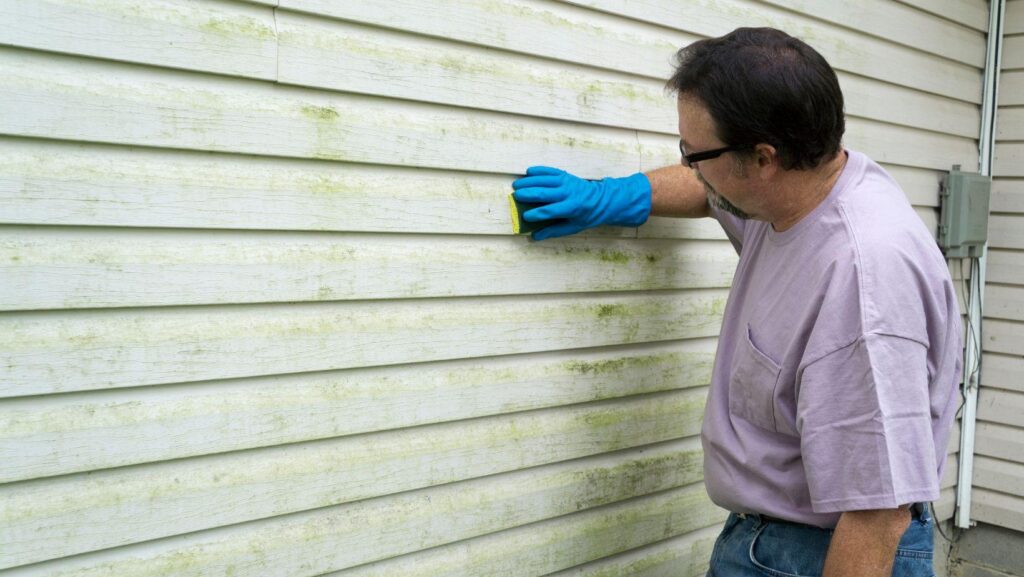
Why green algae shows up where you least want it
Green algae is basically nature’s slip-and-slide. It settles in places that stay damp, shaded, and slightly porous, then spreads in a thin film that can look harmless until you step on it. Walkways on the north side of a home, the shady edge of a deck, the base of painted siding near sprinklers, and textured concrete around downspouts are common trouble spots. If your patio looks a shade darker after rain and stays that way longer than the rest of the yard, that is algae finding its favorite conditions.
It also helps to know what you are looking at. Green algae is usually a smooth, greenish wash that makes surfaces slick. Moss tends to look tufted and thicker, often collecting in joints. Mildew can look like speckled staining, especially on painted areas. You do not need a lab test, but you do need the right approach, because aggressive scrubbing or the wrong chemical can strip coatings, etch masonry, or leave a patchy “clean” spot that is brighter than everything around it.
Start with a quick surface check before you clean
Outdoor cleaning goes better when you take two minutes to play detective. First, identify what you are cleaning: bare concrete, stained wood, painted decking, coated steps, vinyl siding, or natural stone. Porous surfaces soak up solutions differently than sealed ones, and painted finishes can be dulled by harsh oxidizers or abrasion. Next, notice where the moisture is coming from. A gutter that drips, a sprinkler that hits the same section every morning, or a shrub that blocks sun can make algae return fast even after a perfect cleaning.
Then do a small spot test in an inconspicuous area. Pick the gentlest method you think will work, test it, and see whether the surface lightens, dulls, or feels rougher after drying. This is especially important for decorative concrete, older paint, and stained or painted wood, where a “stronger is better” mindset can turn into a repair project.
A step-by-step cleaning approach that protects paint, stain, and masonry
Step 1: Clear debris and reduce slickness
Sweep off leaves, pine needles, and dirt first. Debris holds moisture against the surface and blocks cleaners from contacting the algae. If the area is very slick, sprinkle a little sand or use shoes with good traction while you work. It is not glamorous, but it keeps you upright.
Step 2: Choose the mildest method that fits your surface
For painted and stained surfaces, start with water and a soft brush, plus a cleaner approved for exterior finishes. For masonry like concrete pavers and steps, you can usually step up to a dedicated algae treatment, applied according to label directions, then let time do the heavy lifting. If you are looking for a ready-made option to tackle slippery growth on patios and similar outdoor surfaces, a targeted green algae remover can be a practical choice because it is designed for outdoor stone and concrete where algae tends to settle in pores.
Step 3: Rinse intelligently, not aggressively
Pressure washers can be useful, but they are also famous for etching soft concrete, shredding wood fibers, and forcing water behind siding. If you use a washer, keep pressure moderate, use a wide fan tip, and maintain distance. A calm rinse that removes residue is the goal, not blasting the surface into submission. On painted areas, a garden hose with a spray nozzle is often the safer call.
Step 4: Let it dry fully before judging results
Algae can leave staining that looks worse when wet. Give the surface time to dry, especially on porous concrete and pavers. What looks like “still dirty” right after rinsing often fades as moisture evaporates. This patience also helps you avoid over-cleaning and accidentally lightening one spot more than the rest.
Common mistakes that make algae come back faster
Over-scrubbing textured or coated surfaces
It is tempting to attack green patches with a stiff brush until your arms give out. On painted decks, stained fences, and coated steps, that can burnish the finish, create shiny spots, or open micro-scratches where moisture can sit. If you have ever seen a deck board that looks “fuzzy,” that is often fibers lifted by aggressive washing or scrubbing. A better tactic is dwell time, meaning let the cleaner work, then use a softer brush to lift the loosened growth.
Using the wrong chemistry for the material
Some DIY mixes can discolor stone, weaken certain sealers, or leave residues that attract dirt. If you are not sure what your surface is sealed with, avoid experimenting in the most visible area. When in doubt, spot test, rinse thoroughly, and prioritize products that are intended for the material you are cleaning.
Cleaning without fixing the moisture pattern
If sprinklers hit the same corner twice a day, algae will treat your cleaning like a temporary inconvenience. Adjust sprinkler heads, add a splash block under a downspout, or thin back plants that keep the area damp. Even small changes, like improving airflow around a shaded step, can buy you months of cleaner-looking surfaces.
How to keep outdoor areas cleaner for longer
Prevention is mostly about making the surface less welcoming. Keep joints and edges clear so water drains instead of pooling. Sweep regularly, especially in fall and spring when organic debris builds up quickly. If you have bare concrete or pavers that stay damp, consider whether a compatible sealer makes sense, since reducing porosity can limit how deeply algae anchors itself. For painted exterior surfaces, staying on top of small maintenance, like caulking gaps and addressing peeling paint early, helps keep water out and reduces the damp zones algae loves.
A simple habit that works surprisingly well is a quick rinse after heavy pollen or long rainy stretches, especially on shaded walkways. Think of it like washing salt off a car in winter, you are not deep-cleaning, you are interrupting buildup before it becomes a slick layer.
When the problem is telling you something else
Persistent algae can be a sign of drainage issues, shaded microclimates, or failing surface protection. If your concrete stays dark long after rain, check whether soil or mulch is piled against it, keeping moisture trapped. If painted steps keep turning green near the bottom, look for splash-back from landscaping beds or a downspout that is undersized. And if algae appears on exterior paint that is relatively new, it may be worth reviewing sheen and coating choice, since some finishes hold onto grime and moisture more readily than others.
Handled thoughtfully, algae removal is not just about getting a cleaner patio for the weekend. It is about protecting the surfaces you have already invested in, keeping walkways safer, and making outdoor spaces feel crisp and cared for without turning maintenance into a major renovation.
More Stories
7 Things to Check Before Making a Decision About a Property
7 Things to Know Before Starting a Career in Real Estate
7 Things to Look for When Choosing Technology for a Real Estate Agency
Artificial Plants for Modern Homes: How to Make Your House Look Natural Without Any Effort