
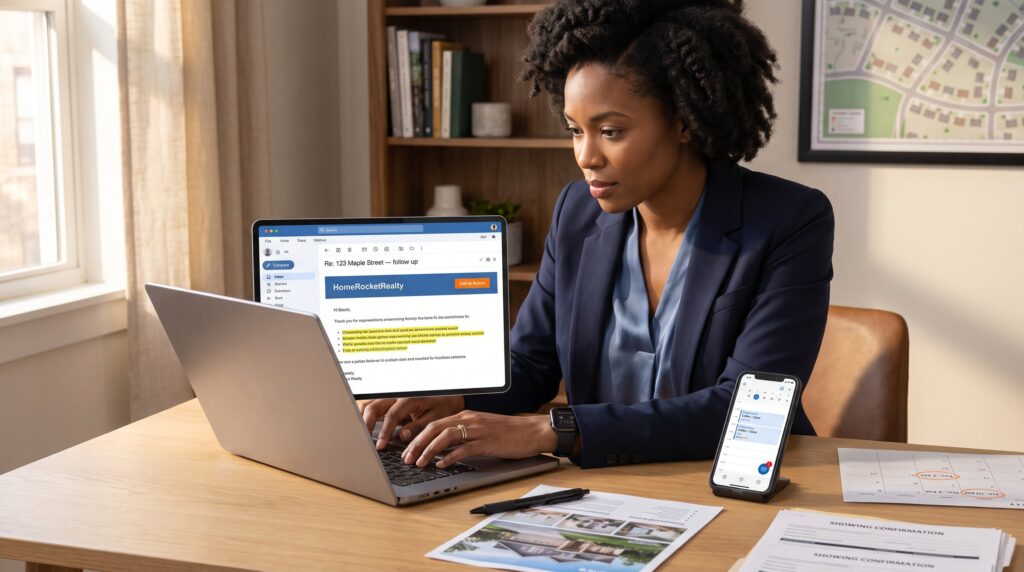
When to Follow Up on a HomeRocket Realty Email is a practical question every buyer, seller, and renter asks after they get a message from the platform. The first 24–72 hours often decide whether a lead turns into a viewing, negotiation, or a missed chance. This guide explains how to identify the type of HomeRocket email received, gives clear timing rules for follow ups, and shows simple templates and low-friction tactics agents and clients can use. It assumes HomeRocketRealty’s mix of automated notices and agent messages and focuses on timing that preserves momentum while respecting other parties’ schedules.
Key Takeaways
- Identify the type of HomeRocket Realty email before following up to save time and avoid unnecessary replies.
- Follow up within 24–72 hours on inquiries and within 24–72 hours on showings or offers, tightening to 24 hours for active deals to maintain momentum.
- Use short, specific replies in the same email thread to reduce friction and preserve context during HomeRocket Realty correspondence.
- Avoid using multiple communication channels simultaneously within 48 hours to prevent confusion and maintain trust.
- Leverage HomeRocket Realty’s automated templates and scheduling tools to streamline follow ups and save significant time.
- When uncertain, reply sooner rather than later to demonstrate professionalism and keep opportunities moving efficiently.
Understand What Kind Of HomeRocket Email You Received
Fact first: identify the email type before deciding when to follow up. A correct read of the message saves time and prevents unnecessary pushes.
Start by checking three items: who sent the message, whether it requires action, and whether a deadline is stated. If a named agent sent the note, it usually expects a personal reply. If an automated system signed it, the message often contains links or prompts that handle next steps automatically.
Concrete examples: a lead form acknowledgment from HomeRocketRealty often reads “Thanks, an agent will contact you.” That is an automated confirmation: following up immediately is optional but useful if the buyer has urgency. A showing confirmation that lists date, time, and address signals a required RSVP or reschedule option and should be handled sooner.
A quick checklist readers can use:
- Sender: named agent vs. system.
- Ask: reply, documents, or decision required.
- Deadline: explicit time or implied urgency.
If the message lacks clarity, treat it like a personal outreach: reply within 24–48 hours. When the email contains attachments such as disclosures or inspection reports, verify attachments first, then confirm receipt in the same thread.
Practical warning: replying across multiple channels (email + text + phone) before 48 hours often creates confusion. Use a single clear reply, then escalate if there’s no response.
When To Follow Up: Clear Timing Guidelines
Answer first: follow up within the windows tied to the message type, 24–72 hours for inquiries, and 24–72 hours for showings and offers depending on urgency. Below are exact rules and why they matter.
After An Initial Inquiry Or Lead Form (24–72 Hours)
Fact first: if someone submitted a lead or initial inquiry, a follow up should happen within 24–72 hours depending on the reply status. If the inquiry produced no reply, follow up within 24–48 hours. If the platform or agent replied with next-step instructions, a response within 24–72 hours keeps the conversation active.
Why this window matters: data from real-estate response studies show leads contacted within one day convert at substantially higher rates than those contacted after 48–72 hours. In practice, a buyer who felt urgency will move to lock a showing: a seller responding quickly retains serious buyers.
Example script for agents: “They inquired about 123 Maple Street, confirm your availability for a showing this week.” Buyers can reply: “I can tour Friday afternoon. Does that work?” Both are concise and specific.
Link: for practical contact details and agent routing, reference the platform’s contact guide using the short anchor below. This helps users find the right address or agent before following up.
- Related resource: the contact guide lists addresses and agent routing information that clarify who should receive your follow up.
After A Showing, Virtual Tour, Or Offer Update (48–72 Hours)
Fact first: after a showing or status update, follow up within 24–72 hours, sooner for feedback or an active offer, later for casual check-ins. If the buyer wants to make an offer, contact within 24 hours: if the goal is simple feedback, 48–72 hours is acceptable.
Example scenarios: after viewing a house, a buyer who loved the kitchen should email a direct question about appliances or HOA rules within 24–48 hours to preserve negotiating leverage. After an offer update, an agent should acknowledge receipt within 24 hours and outline next steps within 48–72 hours if deliberation is needed.
Practical warning: waiting beyond 72 hours after an offer update can cost negotiating position. Sellers often respond faster when they perceive buyer urgency.
How To Follow Up Effectively With Minimal Friction
Direct answer: keep the follow up short, specific, and in the same email thread to reduce friction and preserve context.
Tactics that work:
- Use the same subject line and thread. This keeps property history and attachments connected.
- Lead with purpose in the first sentence: name the property, reference the date of the showing or the exact offer, and state the desired next step.
- Offer a narrow choice instead of an open question. For example: “Can we schedule a 30-minute tour Friday at 4 p.m. or Saturday at 10 a.m.?” That nudges a quick yes/no.
Concrete template: “Following up on 456 Oak Avenue (tour 6/14). Are you available for a 30‑minute call Tuesday or Thursday? I want to confirm next steps on the inspection.” This structure saves back-and-forth and shows clear intent.
Channels and escalation: send one clear email first. If there is no reply in your window, follow up with a single polite reminder. If the contact still does not respond and the matter is urgent, call once and leave a concise voicemail referencing the original email.
Mention of tools: HomeRocketRealty gives agents automated templates and scheduling links. Agents who use those features reduce response friction and cut scheduling time by measurable amounts, many report saving roughly 30–90 minutes per week by automating confirmations.
Link placement: when readers need step-by-step tips about crafting messages or what to include in outreach, the article on drafting messages is helpful. A short anchor below guides readers to those specifics.
- Related resource: for composition tips and checklist items, see the email composition guide.
Natural example of a low-friction follow up:
- Subject: Re: 789 Pine Lane, follow up
- Body first line: “Following up on our showing 9/2. I have two quick questions about the HVAC service record and the garage door opener model.”
This approach creates a clear action path: seller/agent answers two items and the buyer moves closer to a decision.
Practical warning: avoid multiple simultaneous follow ups across different channels unless the timeline is tight. Multiple messages to different channels create duplicate work and can harm trust.
Conclusion
Final insight: apply timing windows but consider message urgency and sender type. Use 24–72 hours for inquiries and 24–72 hours for showings or offers, tighten to 24 hours when deals are live. Always keep messages short, reference specifics, and stay in the same thread to preserve context.
A brief parting tip: when in doubt, reply sooner rather than later, a timely, concise message signals professionalism and keeps opportunities moving.
More Stories
How to Request a Showing by Email
Which Documents to Attach to a Realty Inquiry
What to Include in a HomeRocket Realty Email
Email Subject Lines for HomeRocket Realty Inquiries