
A supportive home environment plays a major role in helping a person with disability live with confidence and autonomy. While assistive equipment is valuable, independence often comes from thoughtful planning of the daily living space and the routines that shape each day. A well-prepared home supports safety, reduces stress, and encourages personal agency. It also helps family members and support workers coordinate care more smoothly so the household remains stable and predictable.
Home life becomes easier when spaces are designed to match the person’s abilities and preferences. Independence doesn’t mean doing every task alone. It means creating a home where the individual feels respected and capable with the right combination of environmental structure and supportive assistance. The goal is to build routines and spaces that reduce barriers while making everyday life feel more manageable.
A Layout That Supports Movement and Comfort
The physical layout of the home strongly influences how easily a person can complete daily tasks. Clear pathways allow smoother movement between rooms and reduce the risk of falls or fatigue. Furniture should be arranged to create wide, uncluttered routes free of sharp corners or tight turns. In rooms where mobility aids are used, it’s helpful to maintain enough space for turning or repositioning without obstacles.
Experienced providers like TQN Care, who specialise in NDIS disability support services, emphasize that these spatial considerations often make the biggest difference in daily independence—more so than expensive equipment or major renovations.
Lighting is another factor that supports independence. Bright, even lighting helps with visibility during tasks like reading labels, grooming, or preparing meals. Sensor lighting can provide safety during nighttime movement, and adjustable lights give the person control over their sensory environment.
Storage is most functional when placed at accessible heights. Everyday items stored between knee and shoulder height reduce physical strain and increase participation in household activities. A predictable layout, where essential items always stay in the same place, creates a sense of control and comfort. This stability makes it easier for the person to complete tasks without constant assistance.
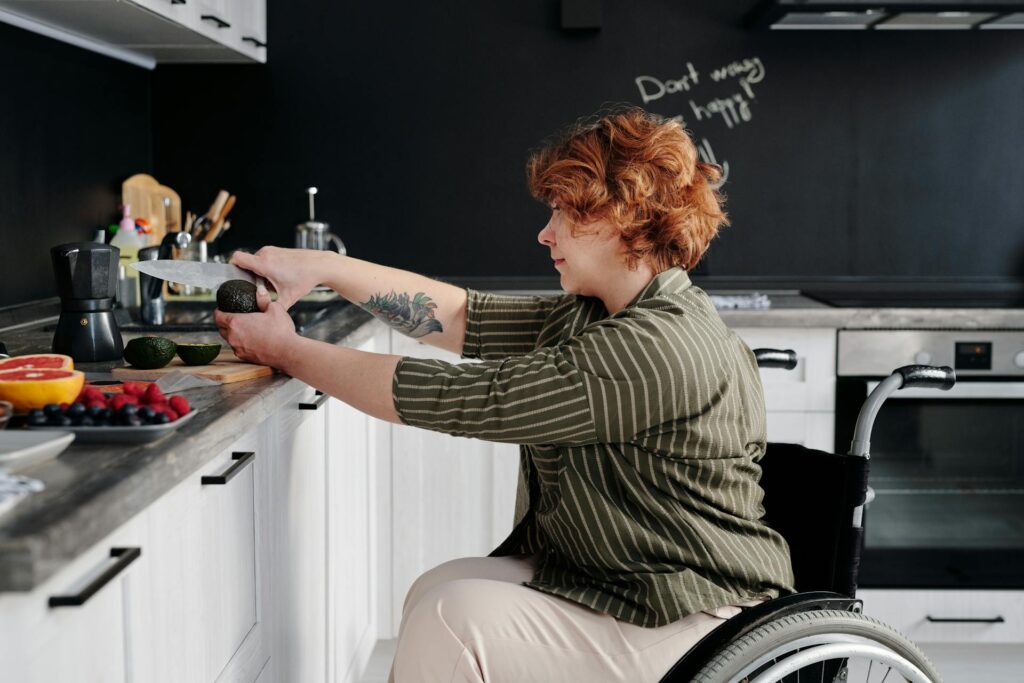
Real-world example: Emma uses a wheelchair and struggled with her kitchen layout for years. After reorganizing her pantry to place frequently used items at arm height and installing pull-out drawers instead of deep cupboards, she went from needing help with every meal to preparing her own breakfast and lunch independently. “It’s not just about being able to reach things,” she explained. “It’s about feeling like this is actually my kitchen.”
Routines That Provide Structure and Predictability
Supportive routines are an important part of independent living. When daily tasks follow a reliable pattern, the person can anticipate what comes next and feel more confident navigating their day. Visual checklists, colour-coded organization, or simple whiteboard reminders can help with task sequencing, especially for morning or evening routines.
Technology can also contribute to routine building. Digital reminders, timers, or smart speakers can help prompt tasks like taking medication, preparing meals, or starting personal care. These tools encourage independence without relying on verbal instruction from others.

Shared household routines benefit everyone. Families or support workers may choose a weekly organizing session to tidy shared areas, restock supplies, or plan meals. This approach reduces last-minute stress and helps distribute responsibility fairly. When routines are clear and consistent, the home environment feels calmer and more manageable for everyone involved.
Cleaning and Household Tasks Made More Accessible
Cleaning can be a physically demanding and time-consuming activity. Breaking tasks into smaller, manageable steps makes upkeep more achievable. Lightweight cleaning tools, long-handled brushes, and simple storage systems can help the person participate at their own pace. Labeling cupboard spaces or grouping cleaning supplies by room reduces confusion and decision fatigue.
Some households choose external cleaning assistance to maintain a safe and healthy living environment. This is often a practical way to conserve energy for meaningful activities. Professional NDIS support for independent living can help coordinate cleaning support that aligns with the person’s comfort level and daily living goals. The purpose isn’t to replace independence but to create a balance between personal involvement and necessary assistance.
Designing a Kitchen That Encourages Independent Meal Preparation
The kitchen is a central area where independence can grow significantly with proper design. Storing essential food items and utensils at reachable heights allows the person to prepare simple meals or snacks without strain. Transparent containers or labeled shelves help with quick identification. Adaptive kitchen tools, such as grip-friendly handles or non-slip preparation boards, support safe cooking practices.
Step-by-step visual guides or pre-portioned ingredients can make meal preparation easier for individuals who benefit from structured reminders. Some families prepare ingredients ahead of time, while others rely on partially prepared meal kits that reduce the complexity of cooking while keeping the person involved.
Having a combination of ready-made meals and ingredients for simple recipes provides flexibility. This approach ensures the person maintains good nutrition without pressure to cook daily if energy levels fluctuate.
Grocery Shopping Systems That Reduce Stress
Shopping is a key part of independent living, and organizing it well can make a big difference. A running shopping list helps track items as they run out. Lists can be kept on a whiteboard, in a phone app, or through shared digital notes. This reduces last-minute decisions and supports budget planning.
Online grocery ordering can help when mobility or sensory challenges make in-store shopping difficult. Delivery or click-and-collect options allow the person to take part in planning meals without the physical demands of visiting a store.
For those practicing life skills, support workers may accompany them on shopping trips. Participating in choosing ingredients, comparing products, and handling payment builds independence and increases confidence over time.
Using Respite and External Support to Maintain a Stable Household
Respite is an important part of a healthy care arrangement. Independence relies not only on the person’s capability but also on the wellbeing of family members and support workers who share daily responsibilities. Planned breaks help prevent burnout, restore balance, and strengthen relationships within the household.
Respite can range from a few hours of support each week to occasional overnight stays. These breaks provide opportunities for the person to experience new environments or interact socially with different support staff. At the same time, they help the family maintain long-term caring capacity.
Coordinated respite contributes to a calm, predictable household rhythm. When respite is scheduled thoughtfully, it supports the person’s independence rather than interrupting their routine. TQN Care’s disability support services include respite care that’s designed to maintain familiar routines while giving families the breaks they need to sustain long-term care.
Creating Emotionally Supportive Spaces
A supportive home focuses not only on safety and functionality but also on emotional comfort. Sensory considerations such as noise levels, light control, and calming color schemes can help the home feel more relaxing and predictable. Some people benefit from having a quiet corner for decompressing, while others feel more secure with open, uncluttered spaces.
Personalization is an essential part of independence. Choosing décor, arranging furniture, or organizing personal items reinforces control and self-expression. When individuals feel they have ownership of their space, they’re more likely to engage confidently in daily tasks.
A Home That Adapts to Changing Needs
Designing a supportive home is an ongoing process. Needs change, technology develops, and routines evolve. What remains constant is the goal of creating an environment where independence feels realistic and empowering.
With practical planning, well-organized routines, and a balanced mix of personal and external support, families can build a space that encourages growth, stability, and confidence. A thoughtfully designed home allows a person with disability to shape their daily life with dignity and purpose.
More Stories
Leading Painting Services for Jefferson County Homeowners
Why Homeowners Trust Chatswood Plumbers For Long-Term Solutions
Setting Up the Ultimate Home 3D Studio: Why a Render Farm Beats Local Hardware