
You’ve been scrolling through listings for twenty minutes. The photos look great — bright kitchen, big windows, nice backyard. You save the property. Then you try to figure out where the bedrooms actually are in relation to each other, whether the living area is open-plan or split, and how you’d get from the front door to the kitchen without walking through the dining room. The photos don’t tell you. You’re squinting at the description trying to piece it together.
Sound familiar? You’re not alone. It’s one of the most common frustrations in online home shopping, and floor plans — good ones — are what fix it.
Photos Show a Home. Floor Plans Explain It
Listing photos are excellent at showing you what a home looks like. Natural light, finishes, garden size, how the kitchen is styled — all of that comes through clearly in good photography. What photos genuinely can’t do is show you how rooms connect.
A photo of a beautiful primary bedroom doesn’t tell you if it shares a wall with a toddler’s room. A wide-angle shot of a living space doesn’t reveal whether the kitchen is separated by a wall or completely open. An image of a hallway gives you no sense of how long it actually is.
That’s the gap a floor plan fills. It shows you the structure behind the styling — the layout, the flow, which rooms sit next to which, and how you’d move through the home day to day. Once you have that picture in your head, the whole listing makes more sense.
What a Floor Plan Actually Tells You
Think about the questions you really want answered before you visit a property. Is the kitchen close enough to the dining area that hosting dinner isn’t a relay race? Are all the bedrooms on the same floor, or is one tucked away downstairs? Does the main living area feel like one connected space, or is it carved into separate rooms? Is there a coat closet near the front door, or are you hanging your jacket on the stairs forever?
A floor plan answers most of these without you having to guess.
It shows room placement and size. It shows the flow of circulation — how you travel from the entrance through to the living spaces and out to the garden. It shows where doors and windows sit, which affects both natural light and privacy. And for families, couples, or anyone working from home, it shows whether the layout actually matches how you’d live in it.
That last part matters more than people realize. A home that photographs beautifully can still feel wrong when you visit if the layout doesn’t suit the way you actually use space. A good floor plan helps you work that out before you drive forty minutes to see it.
2D vs 3D Floor Plans: Which Ones Are Easier to Read?
Most floor plans you see in listings are 2D — a flat, overhead drawing with labeled rooms, rough dimensions, and walls shown as thick lines. These plans are perfectly accurate and useful, especially for measuring furniture or understanding the footprint of a property. Architects and builders work with them every day.
For everyday buyers though, 2D plans can take a moment to interpret. You’re looking at a top-down drawing and trying to imagine the actual experience of being in those rooms. The scale takes some getting used to if you’re not used to reading technical drawings.
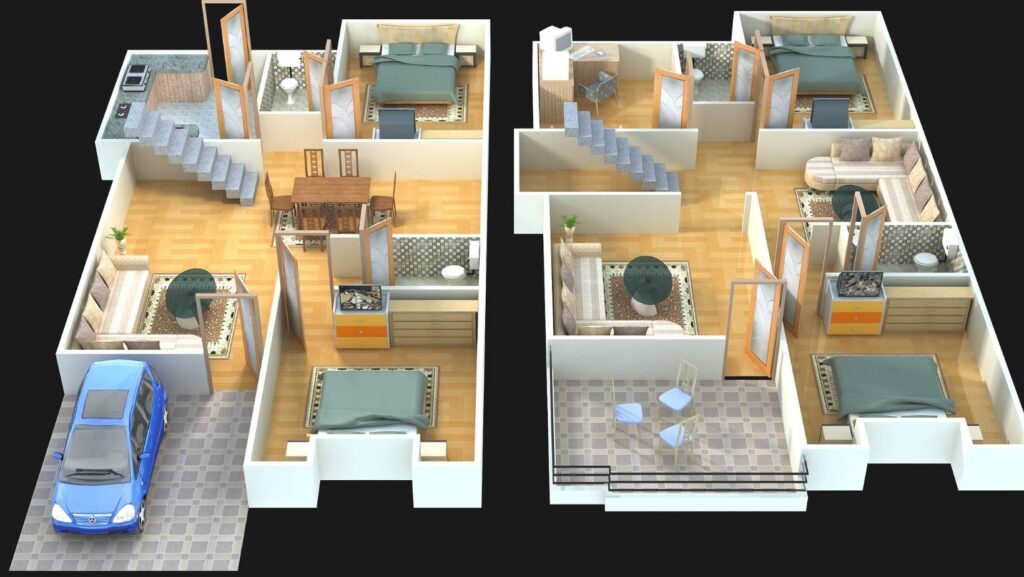
3D floor plans change that dynamic. They show the same layout but from a perspective view, with walls at height, rooms rendered in a way that’s much closer to how you’d actually experience the space. You can see that the hallway is narrow before it opens into a wider living area. You can understand that the kitchen counter is separated from the dining table by a kitchen island rather than just open space. The relationship between rooms clicks more quickly because the visual is closer to what you’d actually see if you were standing there.

The difference between a 2D vs 3D floor plan often comes down to how quickly a buyer can understand room relationships, circulation, and usable space — not to which one is more accurate, since both can be precise.
When a Better Floor Plan Makes a Real Difference
Not every listing needs a three-dimensional rendered floor plan. A straightforward three-bedroom semi with a conventional layout is easy enough to picture from a basic overhead drawing. But there are types of properties where a better plan genuinely changes how buyers experience the listing.
Homes with Unusual Layouts
Split-level homes, properties with rooms on multiple half-floors, converted buildings, or homes with extensions that zigzag off the original footprint — these are genuinely hard to understand from photos alone. A floor plan, especially one that shows the spatial relationship between levels, removes a huge amount of confusion. Without it, buyers often don’t book a viewing because they can’t figure out if the layout works for them.
Open-Plan Spaces
Open-plan living areas can look enormous or they can look underwhelming, depending on the camera lens used. A floor plan shows buyers exactly how much space they’re dealing with — and whether the kitchen, dining area, and living room feel connected or slightly awkward in practice. For buyers who are weighing up whether to put a large sofa in that corner or set up a dining table near the French doors, that spatial context is genuinely useful.
Off-Plan and Pre-Sale Properties
If the home doesn’t exist yet, or is mid-renovation, photos can only show you a building site. The floor plan is the product at that point. The clearer it is, the more confident buyers feel putting a property on their shortlist — or making an offer — before anything is built. When listings need to make layouts easier to grasp from a blank canvas, some agents and developers turn to 3D floor plan rendering services to present the home more clearly and give buyers a realistic sense of what they’re committing to.
Floor Plans Work Best Alongside Everything Else
It’s worth being clear about what floor plans are and aren’t. They’re not a replacement for photos — buyers still want to see the finishes, the light quality, the garden, and how the property has been looked after. They’re not a replacement for a virtual tour or an in-person visit either.
What they are is a missing piece that makes the rest of the listing easier to use.
Photos show atmosphere. Virtual tours show movement. Floor plans show structure. Used together, they give buyers a much more complete picture of a property than any single asset can on its own. A listing with all three is the kind of listing buyers actually feel confident shortlisting — because they’re not left guessing about the things that matter most.
Less Guessing, Fewer Wasted Viewings
Here’s the practical upside for everyone involved. When buyers understand a layout clearly before they visit, they arrive with better questions and more realistic expectations. They’re less likely to walk in and immediately realise the home doesn’t work for them in a way they could have figured out from the listing. That’s good for buyers, who save time. It’s good for sellers, who get fewer low-quality viewings. And it’s good for agents, who spend less time managing disappointment.
The house hunt is already a lot. Scrolling through hundreds of listings, comparing properties across different areas, trying to work out if the square footage really feels as big as it sounds — none of that is easy. A clear, readable floor plan is a small thing that removes a real friction point from that process.
If you’re a buyer, prioritise listings that include one. If you’re selling, add one. It’s one of the simplest ways to help the right people find your home faster — and understand why it’s worth seeing.
More Stories
5 Key Advantages of Steel Buildings for Commercial Office Spaces
Leading 5 Construction Accounting Tools to Streamline Your Financial Workflow
Exterior Cleaning Checklist for Property Managers