
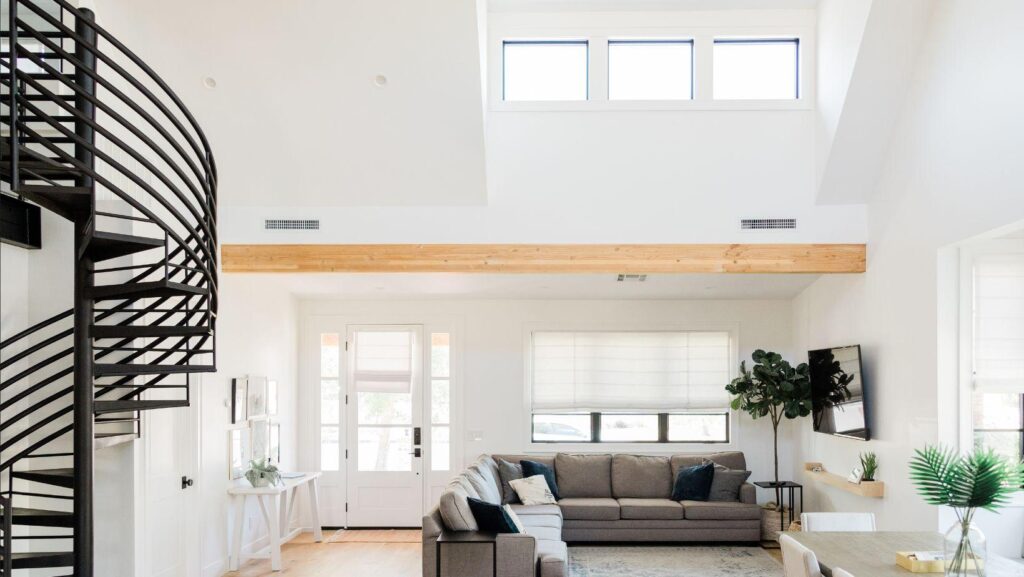
The height of a room is a big reason why your house stays cool when it is hot outside. Houses with tall ceilings have more air inside that needs to be cooled – the air conditioner takes longer to make the room feel the same all over. Cold air is able to settle into place much faster when the ceilings are low. Then again, tall rooms are often cold near the floor and warm near the ceiling – these differences in temperature change how much power you use and how you feel. You can make better plans for your home and take better care of it if you know how this works.
Heat Movement in Tall Rooms
Warm air goes up – rooms with high ceilings often have heat that gathers near the top – this makes the area where you sit feel cooler than the air near the ceiling but it also makes the cooling system less efficient because the air does not mix well. Air conditioners might stay on for a longer time to lower the temperature in these big spaces. Because of this, you might use more power even if the bottom of the room feels fine.
Large rooms with high ceilings make air move in complex paths, especially when walls or furniture are in the way. Using ceiling fans and vents is a good idea because they keep the air from sitting in layers of different temperatures. The cooling system is often unable to keep the temperature the same everywhere if you don’t have these tools.
Air Patterns & Temperature Balance
The way air moves is tied to the height of the ceiling – In tall rooms, the way air rises is more obvious, as it pulls warm air up and sometimes out through vents at the top – this can help get rid of heat but it can also make it harder to control the cooling if you don’t manage it right. Homes with balanced vents usually have temperatures that stay the same across different floors.
Humidity is also important for how comfortable you feel – When air does not move evenly, some spots can feel damp, which makes the cooling feel less effective. Owners look for air conditioning installation Vancouver to find a system that is the right size for the room’s volume and air patterns.
Design & System Performance
Where you put insulation, the height of your windows and how you lay out air pipes all affect how a ceiling height impacts cooling. Big rooms are usually better when experts plan the systems so cold air reaches the spots where people sit or stand. A system is often less effective during hot weather if it is too small or if the setup is messy. You are likely to stay cool and save money for a long time if you plan these details while you build or fix a house.
How well a system works also depends on regular cleaning – Things like clogged pipes, dirty filters or old parts can slow down air and make it hard to keep an even temperature in rooms with high ceilings. You might need AC repair to fix the issues and keep the cooling balanced. Taking care of these details helps the system work well no matter how high the ceiling is.
Useful Tips for Comfort
Is the ceiling height something you have thought about for your comfort? While tall rooms feel open and big, they need more focus on air movement, insulation and the size of the cooling unit. If the design and the machines do not work together, the cooling can be uneven and your energy bills might go up.
It is helpful to know how the shape of your house changes the temperature all year. Small changes, like making the air move better or moving where vents are, can help a lot. When you combine these steps with equipment that is in good shape, your home can stay steady and comfortable even when it is very hot.
More Stories
Why Luxury Buyers Near Bangkok Are Waiting for New Builds Instead of Buying Resale
Holiday Home Repairs Made Magical: Mermaid-Inspired Fixes And The Homeroket Approach (2026 Guide)
Roller Shades For Construction Site Fencing: Durable, Secure, And Cost‑Effective Solutions (2026 Guide)
Luxury Matchboxes: The Home Safety Wizard — Why HMRKTWSX Is Worth Your Attention In 2026