
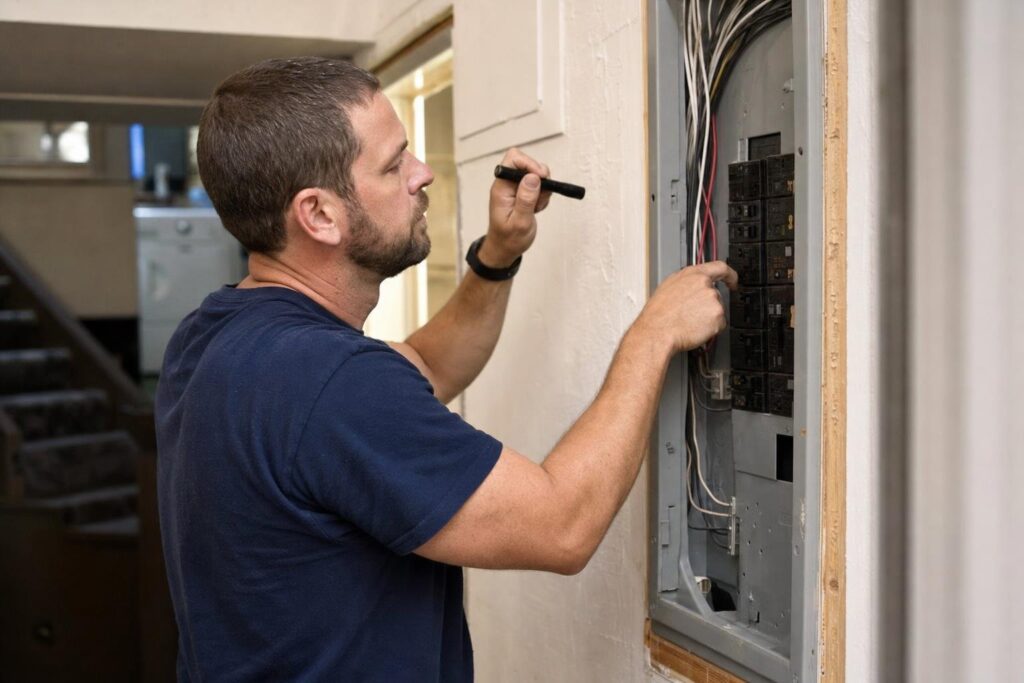
Electrical safety is something every Grand Rapids homeowner should take seriously, especially in older neighborhoods where wiring has not been touched in decades. A hidden problem can go unnoticed for years before it becomes dangerous, and the warning signs are easy to dismiss until they are not. Grapids Home Services has been helping West Michigan families identify and address those risks since 1999. This guide covers what to watch for, simple checks you can do yourself, and when a licensed electrician needs to take over.
Electrical Safety Starts With Knowing What to Watch For
Many Grand Rapids homes built between the 1940s and 1970s still carry their original wiring. Neighborhoods like Creston, Eastown, and the Westside are full of these houses, and that wiring was never designed for the loads a modern family puts on it. A 1950s kitchen built for a refrigerator and a toaster now runs a microwave, dishwasher, coffee maker, and phone charger off the same handful of circuits.
Two wiring types show up often in these homes. Knob-and-tube wiring from the early 20th century lacks a ground wire entirely, leaving modern three-prong devices and surge-sensitive electronics with nowhere to safely send a fault. Aluminum branch circuit wiring, installed widely between 1965 and 1973, oxidizes at connection points and expands and contracts with heat, gradually loosening connections behind outlets and switches. Both are documented fire risks common in older Heritage Hill and Fulton Heights homes that have not had a panel or circuit upgrade in decades.
West Michigan winters make this worse. Space heaters, electric blankets, holiday lights, and HVAC blowers all run simultaneously on circuits built for far lighter loads. Modern code in Grand Rapids, which follows the National Electrical Code adopted statewide in Michigan, requires GFCI and AFCI protection in areas these older homes were never built to handle — which is why so many remodels and home sales trigger the need for an inspection.
Warning Signs Your Home’s Electrical System Needs Attention
What Does It Mean When Lights Flicker in an Older Home?
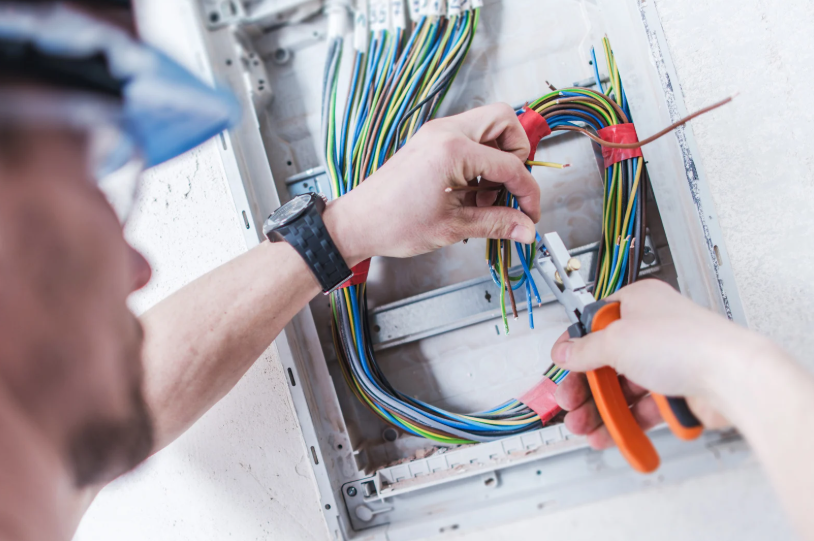
Flickering across multiple rooms, or with no appliance running, points to a loose neutral connection or an overloaded circuit. A single flicker when the furnace kicks on is normal inrush current. The pattern matters more than the single event. Homes from 1965 to 1973 may have aluminum branch circuit wiring, which oxidizes at connection points and raises resistance — making flickering a higher-stakes symptom than in copper-wired houses.
Why Does My Circuit Breaker Keep Tripping?
A breaker that trips repeatedly is detecting an overload or ground fault. It is a diagnostic signal, not a nuisance. In West Michigan, common triggers are space heaters on aging circuits in winter and window AC units added to already-loaded circuits in summer. If the same breaker trips more than once, that is when to call an electrician.
Outlets That Feel Warm or Smell Burnt
Stop using that outlet immediately. A warm outlet or burning smell means resistive heating is occurring at a loose or corroded connection, a direct precursor to an arc fault. A power strip is not a fix; it just moves the problem downstream. The correct step is to stop using the outlet and have it inspected. A Grapids Home Services’ electrical safety inspection can identify exactly where the fault is before it becomes a fire.
Buzzing, Crackling, or Humming Sounds
Audible arcing from a panel, outlet, or switch is a fire risk and should be treated as urgent. The National Fire Protection Association reports that home electrical fires account for roughly 44,000 reported fires each year in the United States, with arcing at loose or damaged connections as a leading cause. If you hear buzzing or crackling from your panel or walls, call (616) 210-3456 before it escalates.
Safe Checks You Can Do Yourself Before Calling a Pro
These steps are safe for any homeowner. Stay outside the panel cover and never touch wiring connections.
- Test your GFCI outlets. Press the “Test” button on kitchen, bathroom, garage, and outdoor outlets. Power should be cut off, then restored when you press “Reset.” If it does not respond, the outlet is no longer protecting you.
- Check your breaker labels. Make sure each breaker is clearly labeled. Unlabeled breakers are common in older Grand Rapids homes and make it harder to shut off power safely in an emergency.
- Inspect exposed wiring. In an unfinished basement or attic, look for cloth-insulated wiring, discoloration, scorch marks, or rodent damage. Cracked or brittle insulation on knob-and-tube runs is a clear sign to bring in a professional.
- Feel for warmth and look for stains. Touch outlet and switch cover plates and watch for brown discoloration around outlets, which indicates heat buildup behind the wall.
Frequently Asked Questions About Home Electrical Safety
How often should an older Grand Rapids home have its electrical system inspected?
A full inspection every ten years is a reasonable baseline for most homes, but older West Michigan houses warrant closer attention. Schedule one when you buy a home, before any remodel that adds load, and any time symptoms like flickering or warm outlets appear. Homes still running knob-and-tube or aluminum branch wiring benefit from more frequent professional checks. You can schedule an electrical safety inspection with Grapids Home Services at (616) 210-3456.
Is knob-and-tube wiring safe to leave in place?
Knob-and-tube can still function when it is undisturbed and properly maintained, but it carries real limitations. It has no ground wire, its cloth and rubber insulation grows brittle with age, and it overheats when buried under modern blown-in attic insulation. Many insurers now limit or decline coverage on homes that still rely on it. If your Heritage Hill or Creston home has original knob-and-tube runs, have a licensed electrician evaluate their condition rather than assuming they are fine.
How can I tell if my home has aluminum wiring?
Aluminum branch circuit wiring was installed in many homes between 1965 and 1973, so the build date is the first clue. In an unfinished basement or near the panel, look for the words “AL” or “ALUMINUM” stamped on the outer cable sheathing, and note that the conductors themselves are silver rather than copper-colored. Do not open outlets or switches to check yourself. An electrician can confirm it safely and recommend remediation such as approved connectors or pigtailing.
What is the difference between GFCI and AFCI protection?
The two protect against different hazards. A GFCI guards against shock by cutting power the instant it detects current leaking to ground, which is why it is required in kitchens, bathrooms, garages, and outdoor outlets. An AFCI guards against fire by detecting the dangerous arcing that loose or damaged connections produce, and it is required in living spaces and bedrooms. Current code calls for both in specific areas, and most older Grand Rapids homes were built before either was required.
Do two-prong outlets mean my home is unsafe?
Two-prong outlets indicate ungrounded circuits, which are common in homes built before grounding became standard. They are not automatically dangerous, but they offer no path to safely carry away a fault or surge, which leaves sensitive electronics unprotected. Swapping in a three-prong outlet without adding a ground is both a code violation and a false sense of safety. The accepted fixes are installing GFCI protection or running a proper ground, both of which an electrician can assess.
Does electrical work in Michigan require a permit and inspection?
Yes. Anytime wiring is added or replaced, an electrical permit and inspection are required under the Michigan Electrical Code, and the work cannot be closed up until an inspector has approved it. Michigan allows homeowners to pull permits for work on their own occupied residence in some jurisdictions, though the inspection requirements are the same as for licensed contractor work, while rentals and commercial properties require a licensed contractor. Larger jobs like panel and service upgrades always trigger inspection. Permit thresholds vary by local jurisdiction, so a licensed electrician typically handles the permitting as part of the job.
About Grapids Home Services
Grapids Home Services was founded in 1999 by D. Nathan Engelsma and is locally owned and operated in Grand Rapids, based at 3325 3 Mile Road NW. The company covers HVAC, plumbing, and electrical under one roof, serving older Westside and Heritage Hill homes with mid-century wiring, newer builds on the outskirts, and everything in between. Third-party credentials include a BBB A+ Rating, BBB Accredited Business status, and HomeAdvisor Screened and Approved recognition. Across more than 5,500 customer reviews, the company holds a 4.8 out of 5 average rating. Grapids Home Services is reachable by phone at (616) 210-3456 or by email at [email protected], Monday through Saturday.
Business Name: Grapids Home ServicesAddress: 3325 3 Mile Road Northwest, Grand Rapids, MI 49534Phone number: (616) 210-3456
More Stories
10 Outdoor Renovation Tips for a More Relaxing Home
Design Your Kitchen with AI: Turn Your Ideas into Reality
Why Dubai Rent a Car Is Essential for Homebuyers, Investors, and New Residents