
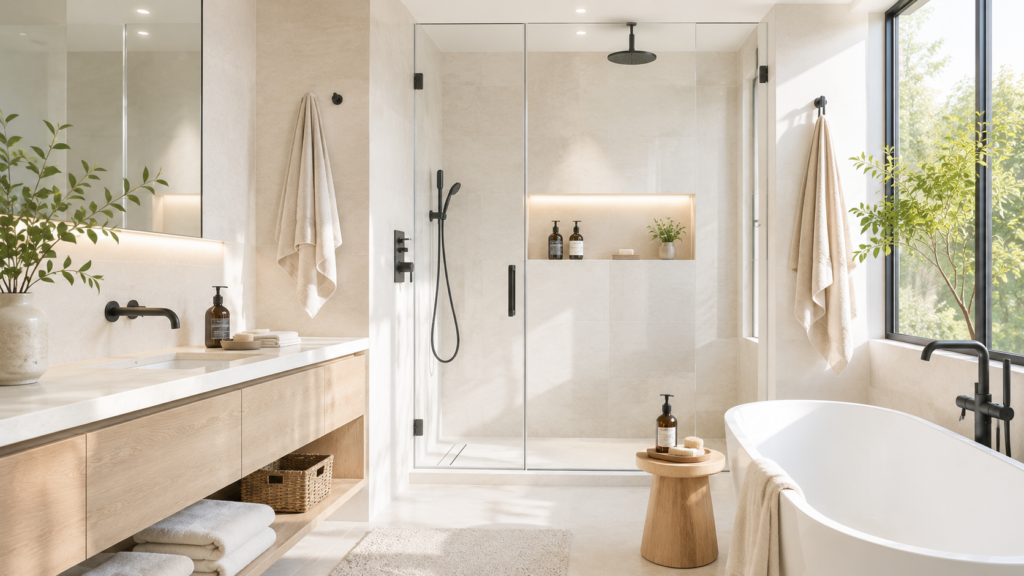
A minimalist hotel bathroom can make one idea feel very convincing: if there is less stuff, the room will automatically look more expensive.
But a hotel bathroom is cleaned every day. Towels are replaced. The countertop does not have to hold a family’s everyday toiletries, and the water marks left after a shower are not still there the following week. A bathroom at home is different. It has to deal with morning and evening use, damp air, shampoo bottles, hairdryers, razors, and all the small corners that never quite dry.
So when bringing that hotel feel into a home, the real question is not how to copy the empty look from a design photo. It is what keeps that calm, clean, ordered feeling working once real life moves in. Not every hotel bathroom idea suits a family bathroom. Some are useful to borrow; others only feel practical because someone is resetting the room every day.
What Makes a Hotel Bathroom Appealing Is Not Emptiness, but Ease
Many people like hotel bathrooms because they feel calm the moment you step inside. The counter is clear, the towels are folded, the glass is spotless, the lighting is soft, and everything looks as though it has just been put back where it belongs.
That ease does not come from design alone. It also comes from a kind of daily reset that most home bathrooms simply do not have. A hotel room is returned to something close to its original state every day, and many hotels refresh their rooms every few years as well. A home bathroom keeps the signs of use: the toothbrush cup put down in a rush, the bath mat still damp after an evening shower, the silicone edge that only gets a proper clean at the weekend.
So the part worth copying is not the blankness of a hotel bathroom. It is the feeling that the room is not making life harder.
The Countertop Is Usually the First Place Real Life Shows Up
When a bathroom has just been renovated, the countertop is often the easiest part to photograph. A small tray, two glasses and two neatly folded towels can look restrained and quietly polished.
A few days after moving in, real life starts appearing there first. Toothbrushes, cleanser, hair clips, razors and electric toothbrush chargers all drift back to the place where they are easiest to reach. I used to love a completely clear basin area too, until I realised that without storage in the right place, people do not change their habits just because the bathroom looks nice. The counter simply ends up full of bottles again.
So a minimalist countertop is worth borrowing, but it should not mean hiding everything away. Daily skincare can sit on the first shelf of a mirror cabinet. Dental floss, razors and spare toothbrushes can go into a shallow drawer. A hairdryer is more useful near a socket than buried at the back of a deep cupboard. Keep only one or two things on the counter that are genuinely used every day, and store the rest by how often they are needed. The bathroom can still feel clear, without relying on constant tidying.
A slightly messy counter is mostly a visual problem. Water getting out is a problem that has to be dealt with every day.
The Thing That Ruins the Hotel Feel Is Often a Damp Bath Mat
Large glass panels, low thresholds and concealed drainage are some of the easiest hotel bathroom features to copy. They look light, and they can make a small bathroom feel more open. At home, though, the real issue is often not whether the glass looks clear enough. It is whether the water stays where it should.
If the bottom of a shower door is not properly sealed, water can slowly run along the edge of the glass. At first it may only be a small damp patch outside the shower. Over time, the bath mat stays wet, the area around the frame starts to darken, and even the flooring outside the bathroom can be affected. With a low-threshold or no-threshold shower, poor falls, drainage and sealing can quickly turn a sleek detail into a daily mopping job.
When planning a shower area, it is worth checking a few details early: whether the glass door opens inwards or outwards, how much space there is between the bottom of the door and the floor, whether the side needs a compression seal, and whether water hits directly where a fixed panel meets a moving door. Small replacement seals for shower doors can make a big difference to whether the bathroom stays dry over time.
If the glass door is already installed, it is still possible to go back and deal with the sealing problem. For UK households dealing with shower door leaking at the bottom, or still unsure what shower door seal do I need, it is more useful to check the glass thickness, bottom gap, side contact point and original seal profile before buying something that only looks similar. On showerdoorseal.uk, SIMBA Seals UK groups bottom shower door seals, vertical shower seals and shower screen seals by where they are used on the shower door, with size diagrams and measuring guidance to help compare them against the glass thickness, bottom gap and existing seal profile. The real question is not which seal looks closest, but which one will actually keep the water inside the shower area.
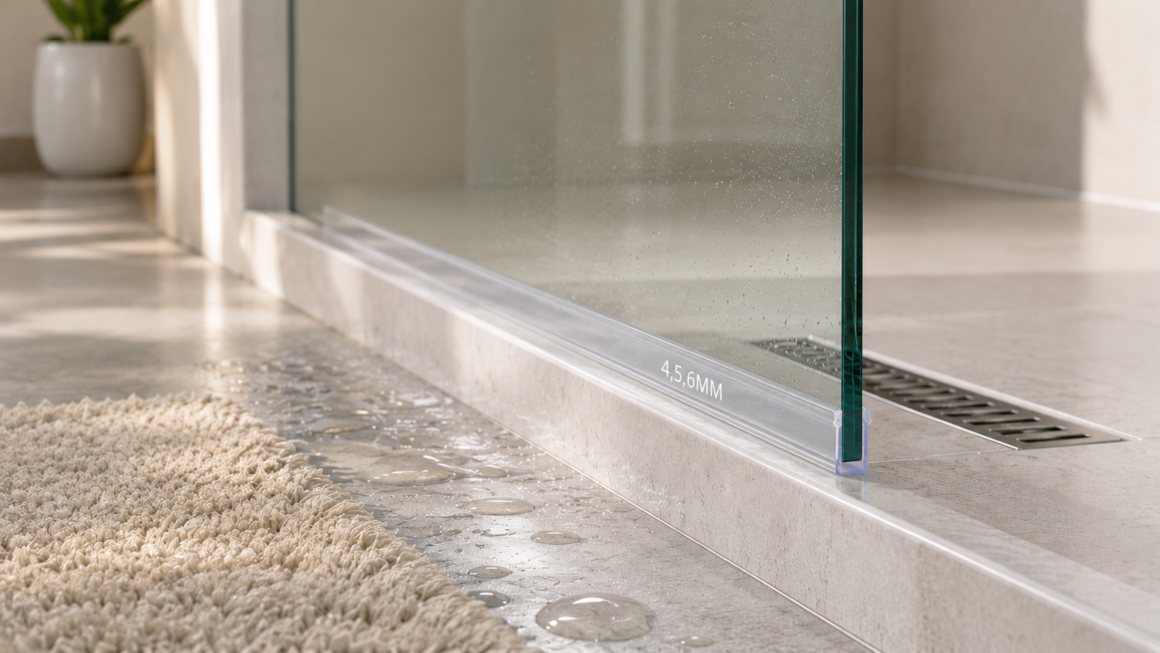
Image URL: shower-door-bottom-seal-leaking-bathroom-detail
Alt: Close-up of a glass shower door bottom seal helping prevent water leaking onto the bathroom floor
Materials Decide Whether It Still Looks Good Six Months Later
Once the water is under control, the next question is whether the bathroom can keep that hotel feel through everyday use. That often comes down to materials and cleaning.
Hotel bathrooms are very good at using materials to create mood. Matt tiles, black brassware, clear glass and stone-effect surfaces can all look calm and considered when they are newly installed. At home, the real test is how they look after six months.
Matt tiles look lovely, but limescale and soap residue can sit on the surface. Black showers and taps feel designed, but in hard water areas they often show pale marks more easily. Clear glass makes the room feel larger, but it needs more regular wiping. Open niches are convenient, but if water collects in the corners, they can grow mould more quickly than a simple shower caddy. Sometimes everything looks clean straight after a shower, then the next morning there is already a faint white ring around the black tap and a little water still sitting in the corner of the niche.
That does not mean these materials are wrong. It just means being honest about how much maintenance you want to live with. If you are happy to wipe the glass down every day, a more open shower area may work well. If you would rather spend less time cleaning, it is better to be more cautious with sealing, drainage, ventilation and finishes. A hotel-style bathroom is not just about looking refined on day one. It has to survive normal use.
Lighting Cannot Only Be for Relaxing in the Evening
Many hotel bathrooms have beautiful lighting. Warm tones, soft edges and hidden strips make the room feel calm, especially in the evening.
A home bathroom has more jobs to do. It needs to work for makeup, shaving, checking skin, bathing children and getting up in the middle of the night. If there is only one attractive ceiling light, problems start to show. The mirror area may not be bright enough, leaving shadows on the face. Light that is too warm can make it difficult to judge skin tone when applying makeup. A night light that is too bright can wake you up completely.
A better approach is to layer the lighting. The mirror needs clear, even light. The shower area needs to be safely lit. The bath or niche can still have a softer, more atmospheric light. If possible, a low-level night light is useful too. That way the bathroom can still feel hotel-inspired without becoming awkward to use every day.
Copy the Feeling, Not the Stage Set
A home bathroom does not need to be a replica of a hotel bathroom. The best part of hotel style is not the empty counter, hidden lighting or expensive-looking surfaces. It is the feeling of walking in and finding a space that is calm, clean and ordered.
To get that at home, the design has to leave room for real life. Towels need somewhere to hang. Shampoo needs somewhere to go. Shower water cannot escape every day. Lighting has to show your face clearly. Ventilation has to move damp air out before it lingers. One awkward detail, used every day, can slowly undo the polished feeling the room had at the start.
A hotel-style bathroom that works at home is not a bathroom with nothing in it. It is one where everything has a sensible place to be. It can still look quiet, but not because function has been sacrificed for the look. That is the sort of bathroom that still feels good after the first few weeks, not just on the day it is finished.
More Stories
Simple Finishing Touches That Elevate Your Home’s Interior Design
Why a Spa-Style Shower Upgrade Is One of the Smartest Small Renovations Before You List
Designing Comfortable Kitchen and Home Bar Seating: Layout, Ergonomics, and Everyday Practicality
Bathroom Layout Gone Wrong? Redesign Ideas to Improve Bathing Space Functionality