
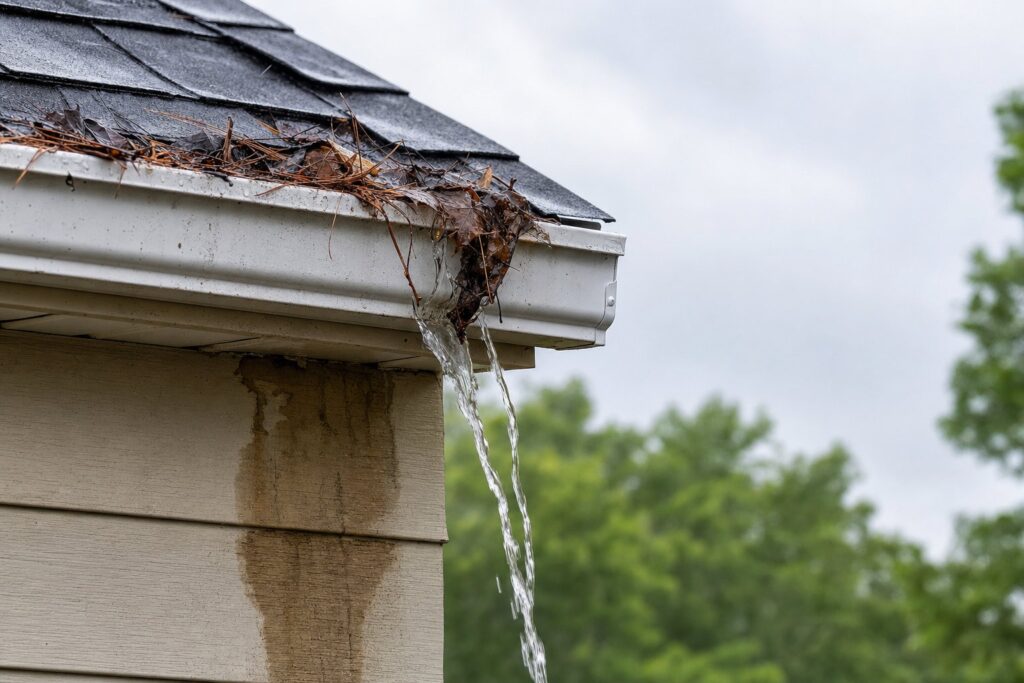
Neglecting proper roof drainage can quietly escalate repair costs for homeowners in the Atlanta Metro Area. Over time, clogged or ineffective gutters and downspouts allow water to accumulate, creating roof drainage problems that spread from the surface to the foundation. Recognizing the risk of poor roof drainage is essential to avoid mounting expenses and preserve the value of any property.
Many homeowners underestimate how much a roof’s drainage system influences the need for repairs as the years go by, and roof repair costs can climb faster than expected. Often, signs of water trouble begin with unnoticed gutter backups or slow-draining downspouts, which are common roof leak causes after a big storm. Atlanta’s frequent heavy rains and humidity intensify these problems, causing moisture to seep into roofing materials, walls, and interiors and increasing the likelihood of roof water damage. If left unresolved, even minor drainage deficiencies can lead to drainage system failure and significant financial burdens. When complete solutions are required, trusted roofing contractors in Lawrenceville, GA are regularly called upon to prevent further damage and safeguard homes.
Common drainage failures and how they cause damage
The most widespread failure in residential roofing is mismanaged roof runoff due to clogged or broken gutters, and these roof drainage problems tend to worsen each season. When debris blocks gutters, water spills directly onto fascia boards and exterior walls instead of being directed away. This persistent exposure leads to wood rot, peeling paint, and secondary leaks that can extend to structural framing and increase roof repair costs. In the Atlanta Metro Area, leaves, pine needles, and airborne dirt quickly clog systems, especially following seasonal storms.
Pooling water on flat or gently sloped roofs is another common issue, particularly if drains or scuppers are not kept clear, and a standing water roof condition is often the first visible clue. If water does not flow freely from these surfaces, it sits and gradually seeps through seams, causing blistering, delamination, or leaks in roofing materials. Over years, areas that consistently hold water will require increasingly expensive repairs, especially when ponding water flat roof patterns repeat after multiple rain events.
Improperly pitched gutters represent another frequently overlooked drainage failure that compounds over time, and poor roof drainage at the edge can quietly undermine the entire roofline. When gutters are installed without adequate slope toward downspouts, water settles in low spots rather than flowing efficiently. This stagnant water becomes heavy, pulling gutters away from fascia boards and creating gaps where moisture infiltrates behind the roofing edge and triggers roof water damage. During winter months, this trapped water can freeze and expand, causing even greater separation and cracking. Homeowners often discover these pitch problems only after noticing sagging gutter sections or water damage along specific stretches of their roofline, by which point the fascia may already require replacement alongside the gutter system itself.
Inadequate downspout placement further exacerbates drainage problems by directing water toward vulnerable areas of the property, and these roof leak causes often start outside the home before moving inward. Many older homes in the Atlanta Metro Area were built with downspouts that terminate too close to the foundation or discharge directly onto driveways and walkways. When heavy rainfall occurs, this concentrated water flow erodes soil, undermines concrete surfaces, and can even penetrate basement walls through hydrostatic pressure. Additionally, downspouts that empty onto sloped yards may channel water back toward the home rather than away from it, creating a cycle of moisture intrusion. Professional roofing assessments often reveal that simply extending downspouts or redirecting their discharge points can prevent thousands of dollars in foundation repairs and waterproofing costs over the lifespan of the home.
Warning signs that your roof drainage is failing
Different visible signals alert homeowners to drainage problems before severe damage develops, and early roof drainage problems are often easiest to correct. Overflowing gutters and water cascading over the roof’s edge after storms are clear signs that the system is blocked or undersized. Streaks or dark marks on siding and fascia often develop beneath compromised gutters, providing evidence of long-term overflow and potential roof water damage.
On flat or low-slope roofs, standing water that remains for more than 48 hours after rain is a leading indicator of trouble, and a standing water roof can signal saturation beneath the membrane. Residents in Atlanta should watch for new water stains on ceilings after storms or detect a musty smell in attics where moisture accumulates. Over time, repeated exposure to water intrusion also creates fertile conditions for mold, deteriorating insulation, and weakened rafters in hidden areas, especially when ponding water flat roof conditions persist.
Foundation cracks and soil erosion near the home’s perimeter serve as additional warning signs of inadequate roof drainage that many homeowners overlook, and this type of drainage system failure can affect far more than shingles and gutters. When downspouts discharge too close to the foundation or gutters overflow consistently in the same locations, water saturates the soil and creates hydrostatic pressure against basement walls. This pressure can lead to hairline cracks that widen seasonally, eventually allowing water intrusion into lower levels. Homeowners may also notice landscape erosion, with mulch washed away or channels carved into flower beds directly beneath roof edges. These exterior signs indicate that roof runoff is not being properly managed, and the resulting damage extends far beyond the roofing system to affect the entire structural integrity of the home.
Preventative measures and repair strategies
Proactive maintenance is crucial to breaking the cycle of escalating repairs from poor drainage, and addressing commercial roof drainage systems early can prevent larger disruptions for business properties. Homeowners should make gutter and downspout cleaning a scheduled part of routine home care, especially after major storms. Installing gutter guards or leaf screens is a practical upgrade that greatly reduces blockage and keeps water moving efficiently away from the house.
When persistent standing water or major overflows occur, a professional roof inspection can diagnose the underlying drainage issues, including clogged roof drains that are hidden under debris. Atlanta area experts, such as Advanced Roofing Atlanta, can recommend improved grading, the addition of downspouts, or realignment of gutters for maximum flow. Addressing grading issues near the foundation also ensures water is carried safely away, preventing costly erosion or basement leaks and lowering long-term roof repair costs. The expense of these preventative measures is significantly less than the large-scale repairs required when drainage troubles are ignored, particularly after drainage system failure becomes widespread.
Upgrading to larger-capacity gutters and downspouts provides a long-term solution for homes that experience frequent overflow despite regular cleaning, and it can reduce the risk of roof drainage problems returning during intense storms. Standard five-inch gutters may prove insufficient for roofs with large surface areas or steep pitches that generate high-volume runoff during intense storms. Six-inch gutters and oversized downspouts can handle significantly more water flow, reducing the risk of overflow damage during peak rainfall events common throughout the Atlanta region.
Additionally, installing downspout extensions that carry water at least six feet from the foundation prevents soil saturation and protects against basement seepage. For properties with chronic drainage challenges, professional contractors can design custom solutions including underground drainage systems, French drains, or rain gardens that manage excess water while enhancing landscape aesthetics and property value, and commercial roof drainage systems may also be engineered to reduce clogged roof drains during heavy debris seasons.
More Stories
Change Your Living Spaces: Interior Design Hacks
Designing an Office Around How Your Business Operates
How to Plan a Desert Move Without Melting Down: A Practical Guide to Relocating in Southern Utah
The Moving Mistakes Most People Only Make Once (And How to Avoid Them the First Time)