
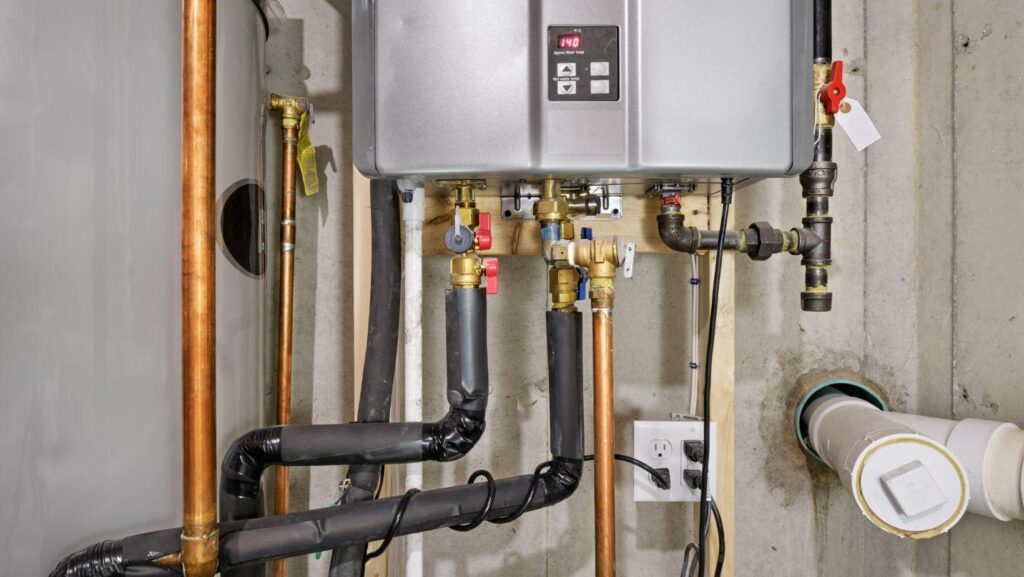
Water heaters have terrible timing, often breaking down in the middle of winter or in the morning when you're already running late. If your traditional tank is well past its prime, you're probably wondering whether to replace it with the same model or finally switch to a tankless system. Good question. Let's walk through it together.
How Each System Works
A traditional tank water heater stores a large volume of water, typically between 40 and 80 gallons, and keeps it heated continuously. Hot water is sitting there, ready to go. But it's also consuming energy 24 hours a day, whether you use it or not.
A tankless unit heats water only when you need it. Cold water flows through a heating element the moment you turn on the tap, and hot water reaches you within seconds. No storage tank, no standby energy loss, no waiting for a tank to refill after a long shower.
Which One Actually Saves You Money?
Tankless water heaters have a clear edge when it comes to efficiency. According to the U.S. Department of Energy, for homes that use 41 gallons or less of hot water per day, tankless units can be 24 to 34 percent more energy-efficient than storage tank models. Even in high-usage households, the savings range from 8 to 14 percent.
Those percentages translate into real dollars on your monthly utility bill. Over several years, that difference compounds significantly, especially in larger homes where hot water use is constant.
The Cost Question: Upfront vs. Long-Term
Here's where most homeowners pause. Tankless units typically cost two to three times more than a conventional tank upfront. Installation adds to that gap because upgrading gas lines or electrical panels is sometimes required.
Traditional tanks are affordable and straightforward to install. Most plumbers can swap one out in a few hours without any major modifications to your home's infrastructure.
That said, if you plan to stay in your home for 10 or more years, the math tends to shift in favor of a tankless system. Lower monthly bills gradually close the gap between what you spent at installation and what you would have spent on a cheaper unit with higher running costs.
How Long Will It Last?
A traditional water heater typically lasts 8 to 12 years. A tankless model, with proper maintenance, can last 20 years or more. That's a significant difference in how often you'll face replacement costs.
When you factor in the longer lifespan, the total cost of ownership for a tankless unit often comes out comparable to or better than that of a traditional tank, even with the higher purchase price.
One thing both types have in common, though, is that hard water is rough on them. High mineral content can wear down a heat exchanger or corrode a tank faster than you'd expect. If you live in an area with hard water, annual descaling isn't optional; it's just good practice.
What Happens When Something Breaks?
Traditional tank heaters are simpler machines. Parts are widely available, most plumbers are comfortable servicing them, and repair costs are generally lower.
Tankless water heater repair requires a bit more expertise. The internal components are more advanced, and not every technician has hands-on experience with all brands and models. When repairs are needed, labor costs can be higher, and diagnosis sometimes takes longer.
The trade-off is maintenance frequency. Tankless units tend to break down less often when they're properly maintained. Annual flushing to remove mineral buildup and checking the inlet filter can prevent the most common issues before they become expensive ones.
What About Hot Water Supply?
Traditional tanks deliver a set amount of hot water. Once that supply runs out, you're waiting 20 to 40 minutes for the tank to reheat. Families with multiple people showering back-to-back know this problem well.
Tankless units supply hot water continuously, which sounds like the clear winner, but there's a limit. If two showers, a dishwasher, and a washing machine all run at the same time, a single unit can struggle to keep up.
The solution is sizing correctly. A plumber can calculate the flow rate your household needs and either recommend a larger unit or suggest installing multiple tankless heaters in tandem. It's an added cost, but it eliminates the problem entirely.
Space and Installation Footprint
Traditional tanks are bulky. In smaller homes, they can take up a significant portion of a utility closet or garage. You don't really notice until you start wishing you had that space back.
Tankless units are wall-mounted and compact. They free up floor space and can even be installed outdoors in mild climates. For smaller homes and condos, this is a practical advantage worth considering.
So, Which One Should You Get?
It depends on where you are in life, honestly.
A traditional tank might be the better call if:
Go tankless if:
It's also worth checking whether you qualify for federal incentives. Certain high-efficiency tankless models certified under ENERGY STAR may qualify for federal tax credits through programs tied to the Inflation Reduction Act.
A tax professional or your local utility company can help you confirm what applies in your area.
Before You Decide
Neither system is the wrong choice; both serve real needs. A traditional water heater is reliable, budget-friendly to install, and easy to service. A tankless unit costs more upfront but pays for itself through efficiency and longevity over time.
Before you buy anything, talk to a licensed plumber. They can assess your current setup, calculate your household's hot water demand, and give you an honest recommendation.
The best water heater for your home isn't always the fanciest one. It's the one that fits your life, your budget, and your plans for the next decade. Get that part right, and you won't be thinking about your water heater again for a long time. Which, honestly, is exactly the goal.
***
Meta Title: Traditional vs. Tankless Water Heaters: Which is Better?
Meta Description: If your traditional tank keeps letting you down, a tankless water heater might be worth the switch. Here's what you need to know before making the upgrade.
More Stories
Change Your Living Spaces: Interior Design Hacks
Designing an Office Around How Your Business Operates
How to Plan a Desert Move Without Melting Down: A Practical Guide to Relocating in Southern Utah
The Moving Mistakes Most People Only Make Once (And How to Avoid Them the First Time)